China High-Speed Rail for Tourists: The Complete 2025 Guide
We booked a flight from Beijing to Xi'an. Two hours of flight time sounded reasonable.
Then we calculated the real door-to-door time: taxi to airport (45 min), arrive 2 hours early, security and immigration-style checks, wait for boarding, 2-hour flight, wait for luggage, taxi to hotel (another 45 min). Total: nearly 7 hours.
The high-speed train? 4 hours and 28 minutes, station to station. Walk on with your luggage. No checked bags. Outlets at every seat. Views of the Chinese countryside.
We took the train. And we'd do it again every time.
Why China's Trains Beat Flying (Under 6 Hours)
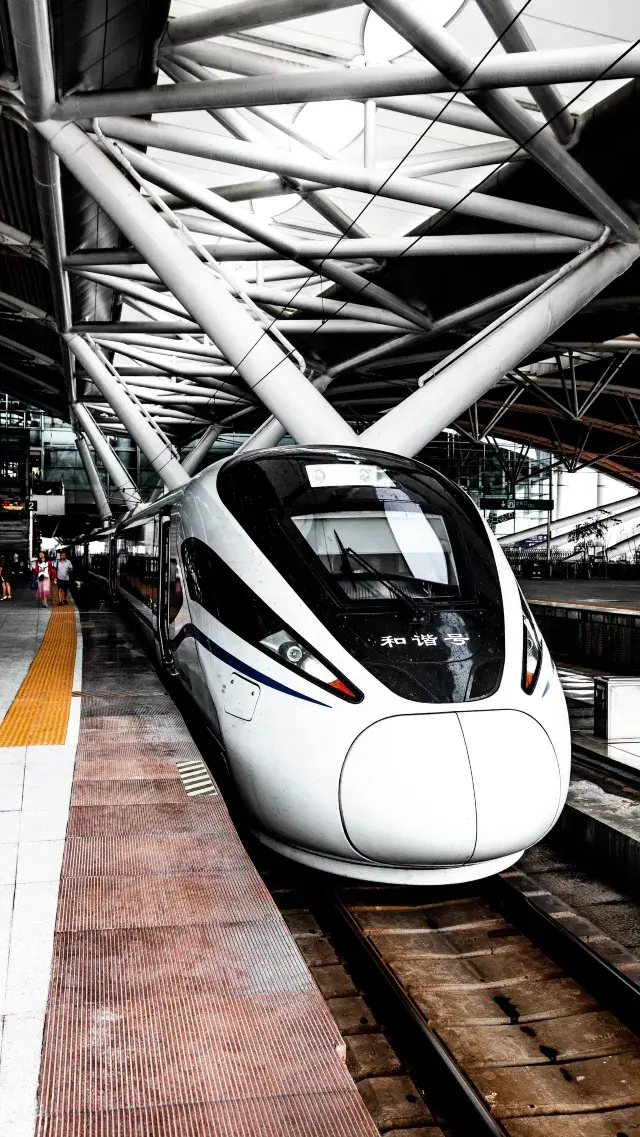
China's high-speed rail network is the largest in the world. Over 40,000 km of track connecting nearly every major city. Trains run at 300-350 km/h—faster than anything in Europe or Japan on average.
Here's why trains win for trips under 6 hours:
- Central stations — right in the city, not 45 minutes away
- 30-minute arrival — that's all you need before departure
- Walk-on luggage — no checked bags, no waiting at carousels
- More legroom — even Second Class beats economy flights
- Reliable — delays are rare; cancellations almost never happen
- Scenic views — watch the countryside roll by at 350 km/h

Train Types: What Do G, D, and C Mean?
You'll see letters before train numbers. Here's what they mean:
| Type | Speed | Example Route | Notes | |------|-------|---------------|-------| | G (高铁) | 300-350 km/h | Beijing → Shanghai | Fastest, newest trains | | D (动车) | 200-250 km/h | Shanghai → Hangzhou | Still fast, slightly older | | C (城际) | 200-250 km/h | Beijing → Tianjin | Intercity, short routes | | Z/T/K | 100-160 km/h | Overnight routes | Older, avoid unless needed |
Our recommendation: Stick to G and D trains. They're modern, fast, and comfortable. Z/T/K trains are older sleeper trains—useful for overnight journeys but not worth it for daytime travel.
Seat Classes: What's the Difference?
Second Class (二等座) — The Smart Choice
- 3+2 seating configuration
- Plenty of legroom (more than economy flights)
- Power outlets
- Tray tables
- Clean, functional
Our take: We rode Second Class for both our trips (Beijing→Xi'an, Zhangjiajie→Shanghai). Perfectly comfortable for 4-5 hours. No need to upgrade.

First Class (一等座) — Worth It for Long Rides
- 2+2 seating (more space)
- Wider seats with better recline
- Quieter carriages
- ~50% more expensive than Second Class
When to upgrade: Trips over 5 hours, or if you want to work on a laptop without elbow bumping.
Business Class (商务座) — Luxury Pricing
- Lie-flat seats on some routes
- Complimentary meals
- 3-4x the price of Second Class
Honestly? It's nice but not necessary. We'd put that money toward a better hotel.
How to Book: Trip.com Is Your Friend
Forget the official 12306 website. It works, but the English interface is clunky, verification is annoying, and payment often fails with foreign cards.
Use Trip.com instead. Small booking fee (~$2-3), but it's worth every penny:
- Full English interface
- International cards accepted
- No Chinese phone number needed
- Instant e-tickets
- 24/7 customer support
Step-by-Step Booking
- Download the Trip.com app or go to their website
- Tap Trains
- Enter your route in English (e.g., "Beijing" to "Xi'an")
- Select your travel date
- Browse available trains (look for G or D prefixes)
- Choose your seat class
- Enter passenger details exactly as they appear on your passport (including middle names)
- Pay with your card
- Receive your e-ticket via email and in-app

Critical: Your name must match your passport perfectly. "JOHN MICHAEL SMITH" on your passport means you enter "JOHN MICHAEL SMITH" in the app. Not "John Smith." Not "J. M. Smith." Exactly as printed.
When to Book
- Tickets go on sale 15 days before travel (sometimes 30 for peak periods)
- Book early for Chinese New Year, Golden Week (Oct 1-7), and summer holidays
- Regular weekdays? Booking a few days ahead is usually fine
Alternative: 12306 via Alipay
There's a 12306 mini-program inside Alipay. It's free (no booking fee) but more complex. Good option if you're comfortable with apps and want to save a few dollars.
At the Station: What to Expect
Getting There
Cities often have multiple train stations. Beijing has Beijing South, Beijing West, Beijing Railway, and more—they're not interchangeable and can be 40+ km apart.
Always double-check your station name on your ticket before heading out.
Arrival Time
- First trip: Arrive 45-60 minutes early
- After that: 30 minutes is plenty
The Flow
Here's what happens when you walk in:
- Security screening — put bags on X-ray, walk through metal detector (similar to airport but faster)
- Ticket/ID check — passport scan at automated gates, or use the manual lane (人工通道) if gates fail
- Waiting hall — find your train number on the departure boards
- Platform assignment — your platform appears 10-20 minutes before departure
- Boarding — gates open, scan again, walk to your carriage

Key Signs to Know
| Chinese | Pinyin | English | |---------|--------|---------| | 进站口 | jìn zhàn kǒu | Station entrance | | 候车室 | hòu chē shì | Waiting hall | | 检票 | jiǎn piào | Ticket check / Boarding | | 站台 | zhàn tái | Platform | | 出站口 | chū zhàn kǒu | Exit | | 人工通道 | rén gōng tōng dào | Manual lane |
Finding Your Seat
- Carriage numbers are displayed outside each car
- Seat numbers are above the seats
- Overhead racks for luggage, or use the space between carriages for large bags
Our Actual Experience
We took two high-speed trains in September 2025:
Beijing South → Xi'an North (G-train, 4h 28min)
- Booked on Trip.com, instant e-ticket
- Arrived 45 min early (first time nerves)
- Station was huge but signs were clear
- Passport gate worked perfectly
- Second Class seats were spacious
- WiFi was spotty, but we had offline content ready
- Snack trolley came through twice
- Arrived exactly on time
Zhangjiajie West → Shanghai Hongqiao (D-train, 6h 20min)
- Longer ride, still comfortable
- Brought snacks from 7-Eleven (cheaper than trolley)
- Used the clean bathrooms twice
- Power outlets kept phones charged
- Watched the landscape change from mountains to plains
Verdict: We'd choose trains over flights for any route under 6 hours. The experience is smoother, less stressful, and often faster door-to-door.
Train vs. Flight: Quick Decision Guide
| Journey Time by Train | Recommendation | |----------------------|----------------| | Under 2 hours | Train always | | 2-4 hours | Train strongly recommended | | 4-6 hours | Train or overnight train | | Over 6 hours | Consider flying |
Examples:
- Beijing → Tianjin (30 min): Train
- Shanghai → Hangzhou (1 hour): Train
- Beijing → Xi'an (4.5 hours): Train
- Beijing → Chengdu (8 hours): Fly
- Shanghai → Chengdu (10+ hours): Definitely fly
Pro Tips From Our Trips
Download offline content. WiFi on trains is unreliable. Download movies, podcasts, or reading material before boarding.
Bring your own food. The trolley has snacks and instant noodles, but they're pricey. Convenience stores near stations have better options.
Screenshot your ticket. If your phone dies or internet fails, you'll still have your booking info. Show it to staff if needed.
Know your exit. Major stations have 10+ exits. Use Amap to figure out which exit is closest to your destination or metro line.
Sit facing forward. Some seats face backward. If this bothers you, check seat numbers when booking—odd-numbered seats typically face forward.
When Things Go Wrong
Passport gate won't scan
No problem. Walk to the manual lane (人工通道). Staff will check your passport and ticket manually. Happens regularly with foreign passports.
Platform not showing
Platforms are assigned 10-20 minutes before departure. If you don't see yours yet, you're probably too early. Grab a coffee and wait.
Missed your train
Go to the ticket window. They can usually switch you to the next available train for a small fee. This isn't a disaster—just inconvenient.
Train delayed
Rare, but it happens. Your app will update automatically. Connections might get tight—build buffer time into your itinerary.
Don't Want to Figure This Out Yourself?
Booking trains, understanding stations, and troubleshooting problems in a foreign language is a lot.
If you'd prefer to have someone handle the logistics—or just have backup when things go sideways—check out our Guardian package. It includes travel planning support and 24/7 WeChat assistance for $19.
Bottom Line
China's high-speed rail is genuinely world-class. Once you've done it once, you'll wonder why anyone bothers with domestic flights.
Pre-trip checklist:
- [ ] Trip.com downloaded
- [ ] Passport details saved in the app
- [ ] Route researched (confirm exact station names)
- [ ] Tickets booked 15+ days in advance for peak dates
- [ ] Key Chinese signs screenshotted
- [ ] Offline entertainment downloaded
See you on the G-train.
Related Guides:
Need more than the guide?
This guide covers the basics. If real-world friction shows up, you can compare the support options and choose the level of human backup that fits your trip.